How to Market a Book: A Guide for Christian Nonfiction Authors
Marketing a Christian nonfiction book is not a launch event. It's a long ripple after launch when the right reader finds the right book. Here is what actually works in 2026.
By Kevin White — founder of Spirit Media Publishing. Published May 19, 2026.
Marketing a Christian nonfiction book is not a launch event. The publishing industry has spent two decades teaching authors to think in launch weeks — bestseller list strategy, pre-order campaigns, blog tour stunts. None of that is what actually moves a Christian nonfiction book in 2026. What moves it is the long ripple after launch: cover and back cover doing their job in the first ten seconds, an author platform doing its job over months, and individual readers finding the book and sharing it with the people they know. The right reader is the one who, on page 30, recognizes their own story and tells someone else about it. The marketing job is to make that recognition possible — and to make sure the book is in front of the people who will recognize themselves in it.
Key takeaway: Christian nonfiction marketing rests on four things, in this order: a book that earns recognition (cover, back cover, content), an author platform that keeps it visible (primarily YouTube in 2026), the long ripple of reader-to-reader sharing, and patience. Launch-week tactics serve none of these.
Jump to: Cover and back cover do the first ten seconds · YouTube is the platform that compounds · The long ripple after launch · What does not work
Cover and back cover do the first ten seconds
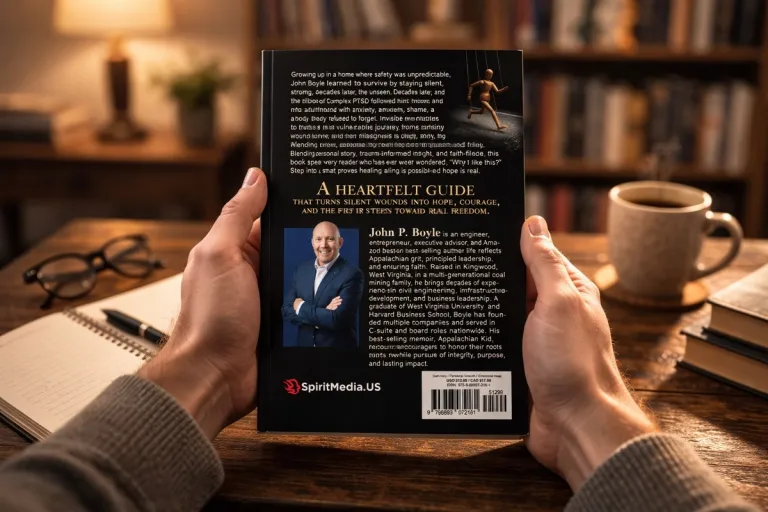
The book does its first marketing work before anyone reads a word. The cover signals genre, quality, and audience in a half-second of browsing. The back cover, when it gets the chance, has roughly ten seconds to turn interest into a buy. Most Christian authors pour heart into the manuscript, labor over the title, wrestle the cover into shape — and then treat the back cover as a formality. That is a costly mistake. The back cover is one of the most valuable pieces of real estate on the entire book. Reedsy, IngramSpark, and trade-publishing convention all agree on the structure that works: a hook that names the reader's pain or longing in the first line, a promise that names what the book will do for them, three to four short proof points, a vivid line about the author, and a clear call to read. Read Your Book's Most Overlooked Sales Tool: Why the Back Cover Matters More Than Most Authors Realize for the full structure and a worked example. If your cover and back cover are not earning the first ten seconds, no amount of launch-week marketing can carry the book.
YouTube is the platform that compounds
For Christian nonfiction authors in 2026, YouTube is the platform that compounds. Pew Research's most recent data shows YouTube now reaches more U.S. adults than any other social platform. More importantly: a YouTube video is a permanent, discoverable asset, not an ephemeral social post. A strong video keeps generating views and book sales months and years after publish. A strong Instagram post is gone in 48 hours. The math is not close. The trap most Christian authors fall into is treating YouTube as a social platform — post and hope it goes viral. That misses what YouTube actually is: a search engine for video. Every video should be built to answer a question the right reader is already typing into YouTube's search box. Title and thumbnail matter more than production polish. Consistency matters more than frequency. Read How to Master YouTube Without It Mastering You for the strategic frame, and How to Revive a Dead YouTube Channel and Grow to 10,000 Subscribers for the practical step-by-step. If your YouTube channel does not exist or is dormant, that is the highest-leverage marketing work you can do this quarter.
The long ripple after launch
Most of a Christian nonfiction book's lifetime sales happen after launch week. Nine months after publication, a 30-year NASA veteran named Pete picked up Humble Influence by Jim Matuga — a book he had no prior connection to — read it, recognized his own life in it, and shared it with conviction and personal connection. "When I read Jim Matuga's Humble Influence, I thought he was describing my own journey of followership." That moment was not engineered by a marketing campaign. It was the long ripple of a book that earned recognition meeting a reader who recognized it. Read When a Stranger Finds Your Book for the full story and what it teaches about what we are really doing when we publish. Your job as the author is to build the conditions for that moment — a book worth recognizing, a platform that keeps the book visible, and the patience to let recognition happen on its own schedule. The platform does not have to be massive. It has to be alive.
What does not work
A short list of what does not move Christian nonfiction in 2026: paid bestseller-list campaigns that buy 5,000 units in launch week and produce no readers; blog tours on tiny blogs that no one reads anymore; pre-order incentive stacks that mostly reward people already going to buy; podcast tour appearances on shows your reader doesn't listen to; Instagram quote graphics that get likes from other authors but not buys from readers; Facebook ads aimed at a "Christian nonfiction" interest segment that is mostly other authors. None of these are evil. They mostly just don't work. The good news is the things that do work — a book that earns recognition, a platform that keeps it visible, patient time for the ripple — are accessible to any ministry author willing to build them. The Spirit Media production tracks (Express Books and full-length) are built to deliver the first ingredient — a book that earns recognition. The author brings the second and third.
A simple test: before you sign a marketing engagement or spend ad budget, ask the firm or platform to show you three Christian nonfiction books they marketed last year and the actual sales trajectory of each. Vague answers mean they have nothing to show. Specific answers mean they understand what they sold and why.
How email fits into Christian book marketing
YouTube discoverability and word-of-mouth ripple are the two compounding assets. Email is the asset you own that connects them. Every YouTube viewer who joins your email list becomes a person you can reach when a new book launches, a new sample chapter goes out, or a new conversation starts. Every reader who finds your book and wants to keep hearing from you needs a place to be found again. The list does not need to be massive. A list of 3,000 readers who open and care is worth more than 50,000 disengaged subscribers. The discipline is consistency: a useful email at a predictable cadence, not a launch-week blast every 18 months. Most Christian authors who eventually have a profitable book career got there because they built an email list over years before they had a book to sell, then nurtured that list with content that actually helped the reader between books.
When to start marketing your book
The honest answer is: 12–24 months before launch. The author who shows up the week of publication with a finished book and no platform is starting too late to get most of what the book could earn. The author who starts a YouTube channel 18 months before launch, builds an email list in parallel, and lands the cover and back cover at trade-publishing quality has done the work that makes launch week into a real event instead of a ceremonial milestone. Spirit Media's production process is designed to run alongside platform building — we ship the book on a timeline that gives the author room to do the platform work the book needs. Read How to Revive a Dead YouTube Channel and Grow to 10,000 Subscribers for the practical platform-building plan if you are starting from a dormant or empty channel.
Related pillar pages: How to Publish a Christian Book in 2026 · Christian Author Platform Building
_Continue reading: Your Book's Most Overlooked Sales Tool · How to Master YouTube Without It Mastering You · When a Stranger Finds Your Book_