When a Stranger Finds Your Book: A Real Story of the Ripple Every Author Dreams Of
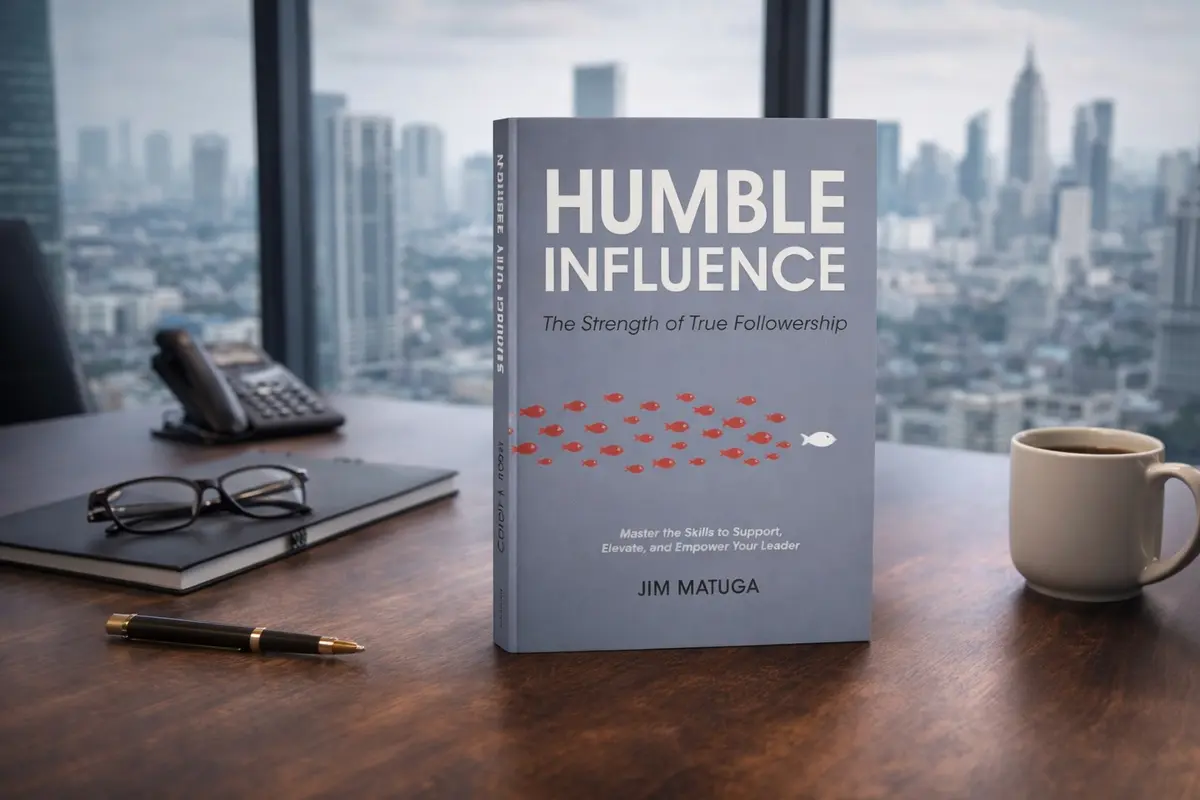
Nine months after publication, a NASA veteran discovered Humble Influence—and did what every author dreams of. He shared it with conviction, clarity, and personal connection.
By Kevin White — founder of Spirit Media Publishing. Updated May 12, 2026.
Nine months after publication, something happened that no marketing strategy can manufacture. A 30-year NASA veteran picked up a book he had no connection to, read it, saw himself inside it — and then did what every author quietly hopes will happen. He shared it. Not casually, not out of obligation, but with clarity, conviction, and personal connection. "When I read Jim Matuga's Humble Influence, I thought he was describing my own journey of followership." That sentence alone tells the whole story. It was not a reader finishing a book; it was a reader recognizing himself inside it. Publishers Weekly and Jane Friedman's writing on long-tail book marketing have made the same point for years — the books that endure are the ones that get carried by readers, not by ad budgets. This is what that looks like in real life.
Key takeaway: Books do not spread because of algorithms or launch-window momentum — they spread because of resonance. A well-stewarded, conviction-driven book reaches the right reader nine months or nine years after publication, and that reader becomes the multiplier. The author's job is not to manufacture attention; it is to write something true enough to travel.
Jump to: The moment that changes everything · Writing what is true, not what is trendy · When a reader becomes a multiplier · What this teaches every author · The viral ripple effect is not hype — it is human · Why this matters for Kingdom authors
The moment that changes everything
Brady Pyle is not just any reader. He spent 30 years serving and leading at NASA — a career shaped by excellence, mentorship, and mission-driven leadership at one of the most respected organizations in the world. When he encountered Humble Influence, he didn't respond as an executive. He responded as a human being who felt seen.
He described how the book reflected his lived experience — humility to serve, courage to challenge respectfully, loyalty to the mission, the initiative to step forward when needed. These weren't abstract ideas to him; they were the very principles that shaped his career. And then he did what every author quietly hopes will happen: he told others. "You'll be inspired to become an even better follower — no matter your role in an organization." That is the ripple beginning.
Writing what is true, not what is trendy
Jim didn't write Humble Influence to chase attention. He wrote it to articulate something he believed deeply — that followership, when understood correctly, is not passive. It is powerful. That conviction is what made this moment possible. Because when Brady read the book, he didn't encounter clever ideas or polished language. He encountered truth that aligned with decades of real-world experience.
This is the asymmetry most marketing advice gets wrong. The ECPA tracks bestseller patterns across Christian publishing every year, and the books that show up year after year are not the ones with the loudest launches — they are the ones whose readers can't stop recommending them. We unpack this same dynamic from the cover side in our piece on back-cover copy that actually sells books. When the cover, the message, and the lived experience of the author all point at the same truth, the book becomes carryable.
When a reader becomes a multiplier
Brady didn't just read the book. He extended it. He translated his experience into language others could understand, connected the message to real leadership in real organizations, and shared it with a network that trusts his voice. That is influence — not because of platform size, not because of strategy, but because of authenticity.
Authors cannot manufacture this. It happens when a message lands deeply enough that someone feels responsible to pass it on. Jim's response reflects the same posture of humility and clarity. He didn't elevate himself. He honored the reader. He recognized the significance of Brady's journey and affirmed something that sits at the heart of the message — that strong organizations are built not just by leaders, but by people who know how to follow well, with humility, courage, loyalty, and initiative.
If you are an author trying to build the kind of book that earns this response, schedule a free consultation call — we'll talk through what conviction-driven publishing looks like for your specific manuscript or idea.
What this teaches every author
If you are an author, this moment should recalibrate your expectations. Your responsibility is not to manufacture attention. It is to steward the message well enough that when the right reader encounters it, they recognize its truth.
Many authors think success looks like momentum at launch — early sales, rankings, immediate visibility. But Brady found the book nine months later. The book is still moving. Still finding the right readers. Still resonating. Still creating conversations. That is what real impact looks like. It is not confined to a launch window; it unfolds over time, often quietly, until suddenly it becomes visible through moments like this. The deeper move, then, is to write with conviction and prepare for a long arc — not a short one. We extend this principle into the broader publishing infrastructure question in our piece on AI-powered ministry infrastructure.
The viral ripple effect is not hype — it is human
We often use the word viral to describe explosive, fast-moving content. But the most meaningful ripple is slower. It moves through trust, through credibility, through lived experience. One reader becomes a voice. That voice reaches others. The message continues forward.
That is exactly what happened here. A book written in faithfulness. Read in the right moment. Shared with authenticity. Now expanding beyond its original reach. The viral metaphor borrowed from epidemiology gets the spread mechanism backwards — real human transmission is high-trust, low-volume, and slow at the start. Then it compounds. The early ratio of "books read carefully" to "books shared confidently" is what determines whether a title becomes carryable five years out.
Why this matters for Kingdom authors
At Spirit Media, we believe this is not accidental. When a message is aligned with truth, it carries weight beyond the author. It reaches people the author will never meet, in moments no one could orchestrate. That is stewardship — not just writing a book, but releasing something that can move through lives, conversations, and communities.
Jim's book reached Brady. Brady's voice now reaches others. The ripple continues. This is the dream — not just that people read your book, but that they carry it. The most important conclusion for any Kingdom author is structural: invest at the level of message conviction and reader experience, not at the level of launch noise. The book that gets carried at month nine is built at month minus-twelve, in the writing and editing and cover work that makes it worth recognizing yourself inside.
There is a practical implication for how authors and publishers should allocate effort. Most marketing time goes to the first 90 days; most reader-multiplier moments happen after month six. That mismatch is why so many otherwise excellent books never reach the readers who would have carried them. The fix is not bigger launches but longer-lived distribution surfaces — discoverable Amazon and IngramSpark listings that stay clean for years, accurate metadata, a quiet author site that still answers the right reader's questions in month nine, and titles that travel through professional and ministry networks under their own steam. The book you can't manufacture attention for is the book worth writing in the first place.
For Kingdom authors specifically, this is also a theology of writing. You are not the source of the ripple. You are the steward of the words and the channels. The Lord brings the reader. Your job, finally, is to write something worth recognizing — and to keep it alive in the world long enough for the right person to find it. The next nine months of any author's catalog is more important than the first ninety days. That is the unglamorous truth that produces moments like Brady's, and it is the only durable strategy any of us has.