

Your First Book Deal: The Best Christian Book Publishers for New Authors
Which kinds of Christian publishers actually accept first-time authors, how to compare them fairly, and the path most new authors take to a published book.
By Kevin White — Founder & CEO, Spirit Media Publishing, which publishes first-time Christian authors from many nations.
The best Christian book publishers for new authors are the ones that accept first-time writers directly, explain every cost and right in writing, edit to a professional standard, distribute beyond Amazon, and help market the book after launch. For most new authors that means an assisted or hybrid Christian publisher, a small independent Christian press, or a well-supported self-publishing route, because the large traditional Christian houses accept most manuscripts only through literary agents and usually sign authors who already have a large platform. A traditional deal is still possible for a first book, especially with an agent and a strong proposal, but it is a long and uncertain path. Judge every publisher by the same five measures: access, rights, royalties, distribution and marketing. The best one for you is the one that scores well on all five for your book.
Key takeaway: for a first-time Christian author, the best publisher is the one that will actually accept you and puts rights, royalties, distribution and marketing in writing.
Jump to: Who accepts new authors · How to compare · The agent route · Avoiding traps · Our approach · Next steps
Which Christian publishers accept first-time authors?
Christian publishing has four kinds of publishers, and they treat new authors very differently. Large traditional houses, owned by major media companies, dominate the market; Publishers Weekly reported that HarperCollins Christian Publishing alone claims a 42% market share in Bible publishing. These houses pay advances and cover every cost, but most accept manuscripts only through agents. Small independent Christian presses sometimes accept unagented submissions in specific niches, such as devotionals, Bible study or ministry leadership, and publish a handful of titles a year. Assisted and hybrid Christian publishers accept first-time authors directly, share the cost of production, and pay a larger royalty share than traditional houses. Self-publishing service companies will publish anyone who pays, and leave all the rights and all the marketing with the author. For a new author with a finished manuscript and no agent, the realistic choices are usually the last three, and the differences between companies within each kind matter more than the label.
Five ways to compare Christian publishers
Compare every publisher on the same five measures, and write the answers side by side.
1. Access: will they review my manuscript directly, and how quickly will they answer?
2. Rights: who owns the book in each format and language, and can I get the rights back?
3. Royalties: what share do I earn, on what figure, and how often is it paid?
4. Distribution: is the book available beyond Amazon, in bookstores, libraries and other countries?
5. Marketing: what do they do to sell the book after launch, and for how long?
Then look at the work itself. Read the sample pages of three recent books on Amazon, compare the covers to the bestsellers in your category, and contact one or two of their authors. A publisher with great answers and weak books is not the best choice; neither is one with beautiful books and a contract that keeps your rights forever. For our own answers to all five, see our publishing services page.
The traditional route: agents and proposals
If you want a traditional Christian publisher, the path usually runs through a literary agent. For nonfiction you will need a book proposal rather than a finished manuscript: an overview, a description of the reader and the market, a comparison with similar books, a marketing plan, a chapter outline, and two or three sample chapters. Agents look closely at platform, meaning the audience you can already reach through a church, ministry, email list, podcast or social media, because publishers need confidence that a first book will sell. Expect the process to take time. Finding an agent can take months, a sale to a publisher can take months more, and books often release a year or two after the contract. Traditional publishing is not wrong for a first book; it simply suits authors with a strong platform, a timely topic and patience. Many first-time authors start with an assisted or independent route, build their audience, and approach traditional houses with a track record for their second or third book.
Not sure your manuscript is ready for any publisher? Send it for our free 20-point manuscript review ($250 value). Details are on our publishing page.
Publishers new authors should avoid
New authors are the main target of predatory publishing companies, so learn the warning signs before you sign. A guide on Jane Friedman's site lists the biggest red flags: hype-filled promises such as selling your first 10,000 copies, a show of selectivity from companies that accept anyone who pays, bargain prices that cannot cover real editing and design, and poor-quality past work. The same guide notes that quality providers charge $10,000 to $15,000 for basic services while discount companies charge $1,000 to $2,500 for the same list, and warns that you get what you pay for. Add a few more checks for Christian publishers in particular. Be wary of any company that uses faith language to create pressure, that will not tell you the royalty split up front, that keeps your rights for life, or that sells expensive marketing add-ons with no measurable results. A trustworthy Christian publisher will welcome your questions, give you time to decide and put everything in writing.
How Spirit Media publishes new authors
Spirit Media Publishing was built for authors with a message, including first-time authors. We review manuscripts directly, with no agent required, and every manuscript can start with our free 20-point review. If the book is not finished, our Angel Writing service pairs you with a writer who writes in your own words. We edit to the Chicago Manual of Style, design the cover and interior, and publish in paperback, hardback, eBook and audiobook with global distribution through Amazon, IngramSpark, libraries and eBook stores. Every title receives our base marketing and carries a 50/50 royalty split. Authors who want to start smaller can begin with an eBook for $300 to $600, or a short Express Book of about 80 pages, and upgrade later. Our bookstore holds more than 300 titles from authors we have published, many of them first books. Read our guide on choosing a Christian book publishing company for the seven questions to ask any publisher, including us.
Your next step as a new author
Whichever route you choose, a few steps help every new author. Finish the manuscript, or at least a complete outline and three strong chapters. Get honest feedback from readers who are not family. Start building a small audience now, through an email list, a church or ministry network, or one social platform, because every publisher values readers you can reach. Read the contract slowly and ask someone experienced to review it. And choose the publisher that serves your message, not the one that flatters you. Our guide on how to publish a Christian book walks through every stage, and our guide to building an author platform shows how to grow the readership that makes any publishing route easier.
Related Posts
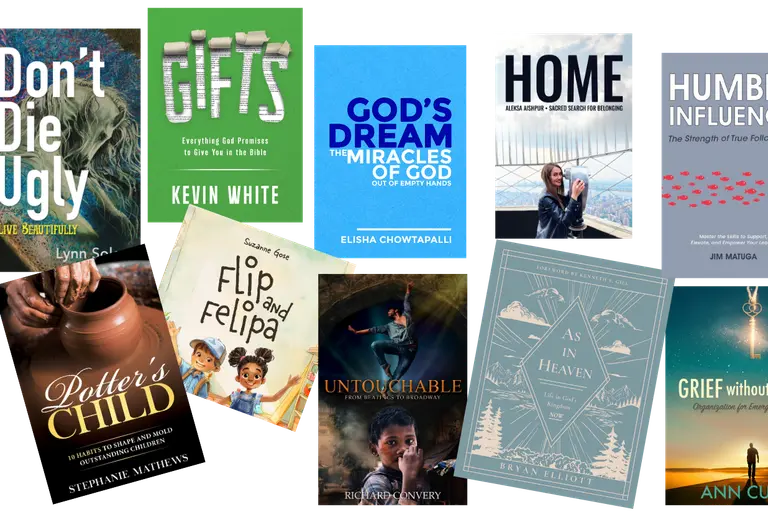
Choosing a Christian Book Publishing Company: 7 Questions to Ask Before You Sign
October 21, 2026

Turn Your Book Into Sound: Audiobook Production Services for Authors
October 21, 2026

Your Message, Your Words: How Christian Ghostwriting Services Work
October 21, 2026