
Keep Your Rights, Share the Load: How Christian Self-Publishing Companies Compare
What Christian self-publishing companies actually do, what their packages cost, how rights and royalties differ, and a checklist for choosing one you can trust.
By Kevin White — Founder & CEO, Spirit Media Publishing, an assisted publisher for Christian authors with more than 300 titles in print.
Christian self-publishing companies help faith-based authors publish their own books by selling the professional services a traditional publisher would provide: editing, cover and interior design, ISBNs, formatting for print and eBook, distribution, and often marketing. Unlike a traditional publisher, they do not buy your rights or pay an advance. You pay for the services, and in most cases you keep more control and a larger share of the royalties. Companies differ in four ways that matter: what is included in each package, who owns the rights and files, how royalties are paid, and whether anyone helps you market the book after it is published. Some are true self-publishing services; others, like Spirit Media Publishing, are assisted publishers that work as a partner and share the royalties. Compare them on total cost and on what you keep, not on the package name.
Key takeaway: choose a Christian self-publishing company by what you keep, rights, files and royalties, and by the total cost to a marketed book, not by the cheapest package.
Jump to: What they do · What packages cost · Rights and royalties · Checklist · When it fits · Our approach
What do Christian self-publishing companies do?
A Christian self-publishing company provides the professional work that turns a manuscript into a book, while leaving the author in charge. The core services are editing, from a developmental edit to a final proofread; cover design; interior layout for print and eBook; ISBN registration; metadata such as categories, keywords and the book description; and distribution through printers and retailers. Many add services specific to Christian authors, such as checking Scripture references and permissions for Bible translations, writing back-cover copy for a church audience, or placing the book with Christian retailers. Most also sell marketing packages and author copies. The model is growing fast. Publishers Weekly reported that self-published titles with ISBNs rose 7.2% in 2023 to more than 2.6 million, while traditionally published titles fell 3.6% to 563,019. That growth means more choice for authors, and more need to compare companies carefully before signing.
What self-publishing packages cost
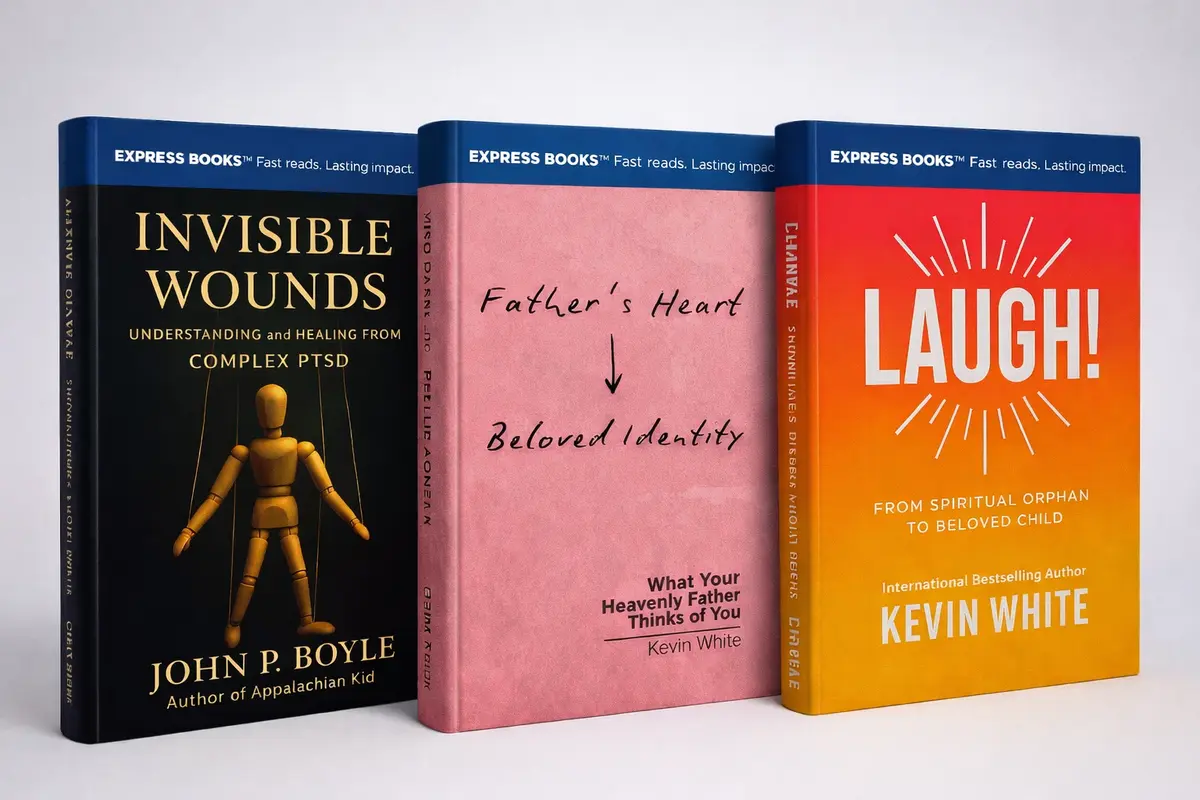
Package prices range widely, and the cheapest is rarely the best value. As a benchmark, Reedsy estimates that hiring professional freelancers to self-publish a book costs $2,940 to $5,660, based on more than 230,000 freelancer quotes, with editing for an 80,000-word book at $2,160 to $5,040 and a median cover design of $930. Self-publishing companies bundle that work. A guide on Jane Friedman's site reports that quality providers charge $10,000 to $15,000 for basic services, while discount companies charge $1,000 to $2,500 for the same list, and warns that bargain prices are not in your favor. At Spirit Media an eBook can start at $300 to $600, a full print package starts around $3,000, and a short Express Book of about 80 pages can be published in about 90 days. Whatever you are quoted, ask for the total cost to a published and marketed book, including author copies and any marketing you will need.
Rights, royalties and files: what you keep
What you keep matters more than what you pay. Ask four questions in writing.
1. Who owns the rights to the book, in every format and language, and for how long?
2. Whose name is on the ISBN, and who is listed as publisher?
3. What royalty do I receive, calculated on what figure, and how often is it paid?
4. Will I receive the final print and eBook files, and the cover files, to keep?
A true self-publishing company should leave the rights with you and give you the files. An assisted publisher may share the royalties in exchange for doing more of the work and the marketing; that can be a good trade if the terms are clear and you can leave if things are not working. The trap to avoid is paying for everything up front and also giving up your rights or most of your royalties. If a company will not answer these four questions plainly before you pay, keep looking.
Want a professional opinion before you choose? Send your manuscript for our free 20-point manuscript review ($250 value). Start on our publishing page.
A checklist for choosing a company
Before you sign with any Christian self-publishing company, work through this checklist. Read the sample pages of three books they published recently, and compare the covers with the bestsellers in your category. Contact at least two of their authors and ask what they would do differently. Confirm the editing standard and how many rounds are included. Check that distribution reaches beyond Amazon to bookstores and libraries; through IngramSpark a title can be made available to 45,000+ retailers, libraries, schools and e-commerce companies. Ask what marketing is included and for how long, and what results other authors have seen. Watch for pressure: limited-time discounts, promises of bestseller status, or faith language used to rush a decision. Finally, read the contract slowly, and make sure you can leave if the relationship does not work. A trustworthy company will be glad you asked every question.
When self-publishing is the right choice
Self-publishing is not a second-best route; for many Christian authors it is the wisest one. It suits an author who already has an audience, such as a pastor with a congregation, a ministry with an email list or a speaker who sells books at events, because those readers will buy whoever the publisher is. It suits a book with a clear, focused purpose, such as a church study guide, a testimony, a devotional for a specific group or a training manual for a ministry, which a traditional publisher may consider too small but which matters deeply to its readers. It suits an author who wants the book out this year rather than in two or three years. And it suits anyone who wants to keep the rights to their message, to translate it, give it away or adapt it freely. Self-publishing is harder for an author with no audience, no budget for editing and design, and no time for marketing. In that case a partner who shares the work, rather than a company that only sells services, is usually the better fit.
How Spirit Media works with self-publishing authors
Spirit Media Publishing works as an assisted publisher: we do the work of a full publishing team, and we share the results with you. We write, if you need help through our Angel Writing service; we edit to the Chicago Manual of Style; we design the cover and interior; and we publish in paperback, hardback, eBook and audiobook with global distribution through Amazon, IngramSpark, libraries and eBook stores. Every book receives our base marketing, because publishing without marketing is just printing, and every title carries a 50/50 royalty split. A standard book is published in about five months, and accelerated paperbacks can be ready in 14 days. We also translate books into the top 20 spoken languages and help authors who want to publish under their own imprint. For the seven questions to ask any publisher, including us, read our guide on choosing a Christian book publishing company, and see our guide on who can help you self-publish your book for the other options.
Related Posts

Who Can Help Me Self-Publish My Book: 4 Real Options Compared
October 21, 2026

Turn Your Book Into Sound: Audiobook Production Services for Authors
October 21, 2026

Your First Book Deal: The Best Christian Book Publishers for New Authors
October 21, 2026