
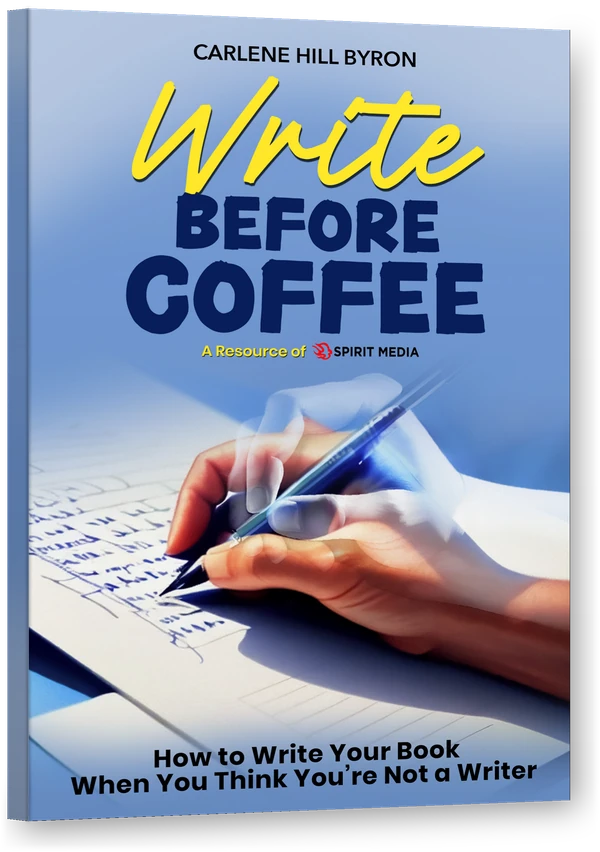
By Carlene Hill Byron
Write Before Coffee
How to Write Your Book When You Think You're Not a Writer
For Christians who sense God gave them a story but freeze at the thought of writing a book, pastors and speakers with material that could become one, and first-time authors who want to start by gathering words, not facing a blank page.
A short, warm guide from a writer and editor of more than 40 years for people who believe they are not writers: why your story matters, where the words for a book come from and how to start.
15% off first order + free standard shipping to 223 countries
Afghanistan, Åland Islands, Albania, Algeria, Andorra, Angola, Anguilla, Antigua And Barbuda, Argentina, Armenia, Aruba, Australia, Austria, Azerbaijan, Bahamas, Bahrain, Bangladesh, Barbados, Belgium, Belize, Benin, Bermuda, Bhutan, Bolivia, Bosnia And Herzegowina, Botswana, Brazil, Brunei Darussalam, Bulgaria, Burkina Faso, Burundi, Cambodia, Cameroon, Canada, Cape Verde, Caribbean Netherlands, Cayman Islands, Central African Republic, Chad, Chile, China, Colombia, Comoros, Cook Islands, Costa Rica, Cote D'ivoire, Croatia (Local Name: Hrvatska), Curaçao, Cyprus, Czech Republic, Denmark, Djibouti, Dominica, Dominican Republic, Ecuador, Egypt, El Salvador, Equatorial Guinea, Eritrea, Estonia, Ethiopia, Falkland Islands (Malvinas), Faroe Islands, Fiji, Finland, France, French Guiana, French Polynesia, Gabon, Gambia, Georgia, Germany, Ghana, Gibraltar, Greece, Greenland, Grenada, Guadeloupe, Guam, Guatemala, Guernsey, Guinea, Guinea-Bissau, Guyana, Haiti, Holy See (Vatican City State), Honduras, Hong Kong, Hungary, Iceland, India, Indonesia, Iraq, Ireland, Isle of Man, Israel, Italy, Jamaica, Japan, Jersey, Jordan, Kazakhstan, Kenya, Kiribati, Kuwait, Kyrgyzstan, Lao People's Democratic Republic, Latvia, Lebanon, Lesotho, Liberia, Libyan Arab Jamahiriya, Liechtenstein, Lithuania, Luxembourg, Macao, Macedonia, The Former Yugoslav Republic Of, Madagascar, Malawi, Malaysia, Maldives, Mali, Malta, Martinique, Mauritania, Mauritius, Mayotte, Mexico, Moldova, Republic Of, Monaco, Mongolia, Montenegro, Montserrat, Morocco, Mozambique, Myanmar, Namibia, Nauru, Nepal, Netherlands, New Caledonia, New Zealand, Nicaragua, Niger, Nigeria, Niue, Norway, Oman, Pakistan, Palestinian Territory, Occupied, Panama, Papua New Guinea, Paraguay, Peru, Philippines, Pitcairn, Poland, Portugal, Puerto Rico, Qatar, Republic of Korea, Reunion, Romania, Rwanda, Saint Barthélemy, Saint Kitts And Nevis, Saint Lucia, Saint Martin, Saint Vincent And The Grenadines, Samoa, San Marino, Sao Tome And Principe, Saudi Arabia, Senegal, Serbia, Seychelles, Sierra Leone, Singapore, Sint Maarten, Slovakia (Slovak Republic), Slovenia, Solomon Islands, Somalia, South Africa, Spain, Sri Lanka, St. Helena, St. Pierre And Miquelon, Sudan, Suriname, Svalbard And Jan Mayen Islands, Swaziland, Sweden, Switzerland, Taiwan, Tajikistan, Tanzania, United Republic Of, Thailand, Timor-Leste, Togo, Tokelau, Tonga, Trinidad And Tobago, Tunisia, Turkey, Turkmenistan, Turks And Caicos Islands, Tuvalu, Uganda, Ukraine, United Arab Emirates, United Kingdom, United States, Uruguay, Uzbekistan, Vanuatu, Viet Nam, Virgin Islands (British), Wallis And Futuna Islands, Western Sahara, Yemen, Zambia, Zimbabwe
You do not have to be a writer to have a book in you. You have a story God gave you, and a bridge to build.
We write to build bridges.
For Christians who sense that God put a story in them but freeze at the thought of writing a book, for pastors, ministry leaders and speakers with sermons and talks that could become one, and for first-time authors who want to start with gathering words instead of facing a blank page. Carlene Hill Byron, a professional writer and editor for more than forty years, shows you why we write, where the words for a book come from and how to begin.
What makes this book for people who think they are not writers
A short, warm, illustrated guide in small pages, written for the person who is holding it because they are "at least beginning to know inside you what message God wants you to carry forward."
Five things set it apart:
- It starts with why. The first question is not how to write, it is "Why write?" Her answer, drawn from the one-lane bridges of her home state of Maine, is that we write to build bridges between people and God and between one person and another.
- It names where the words come from. Words you have already written, words you find and save, and words you create fresh: three sources, so you are never starting from nothing.
- It gives you a way to collect. Bins or folders by subtopic, an online tool, journal books, 3x5 cards, even the little sticky tabs the author puts in books she reads.
- It is honest about the blank page. Two secrets from a long-time professional writer come before four practical tips, one of them the "WEIRDEST TIP" you will ever hear about how to write.
- It shows what a finished bridge can look like. The author tells the story of one volunteer who began with a few boxes in a breezeway and built a ministry that has reached more than a hundred nations, with a book to explain how.
About the author
Written by
Carlene Hill Byron
Published by
 Spirit Media Publishing
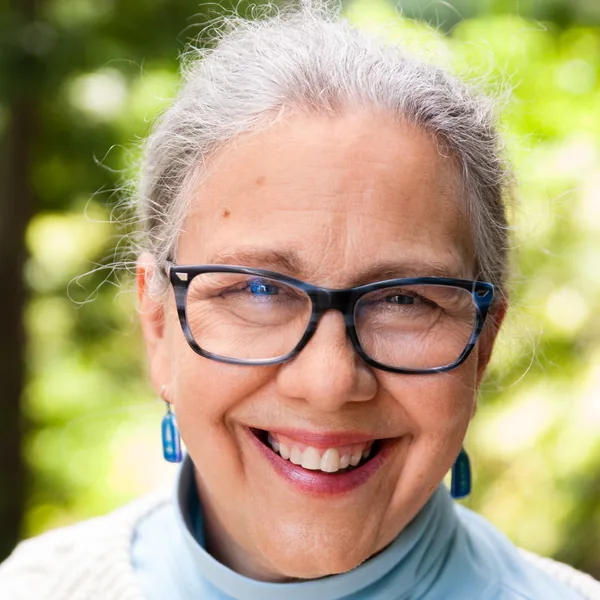
Carlene Hill Byron
Carlene Hill Byron has worked more than 40 years as a professional writer and editor. Her career has spanned a daily newspaper, a tech startup, a large engineering company, two regional faith-based nonprofits, a company that supported SEO for an online global marketplace, and a regional disability nonprofit. Today she is one of the editors and Angel Writers at Spirit Media, where she has helped authors share stories of God's work in their lives. She lives in Maine.
Spirit Media Publishing
Spirit Media Publishing is a Christian publishing and marketing company with a vision to reveal our Father's heart to all nations. It offers full-service book creation and publishing in paperback, hardback, digital and audiobook formats, along with children's titles, compact Express Books, website design and SEO, and podcast and video production. We are glad to publish a guide that helps people who think they are not writers tell the story God gave them.
What's inside
- The case for writing at all, grounded in Ephesians 2:8-10: God is with you, God is working in and through you, and God isn't finished with you yet
- Three sources of words for a book, and two strategies for starting: write to an outline, or write until you discover the outline
- A look at personality types that write differently (visual, auditory and tactile) and how past writing habits shape you
- Four pro tips for getting started, ending with the weirdest one: write before you wake up
- A sticky-note system for organizing a first book, the Hero's Journey applied to Christian living, and how story partners can help
- A full-color 83-page paperback in a small 4 x 6 inch size, with an eBook edition
Product details
- Title
- Write Before Coffee
- Paperback ISBN
- 979-8-89307-033-0
- eBook ISBN
- 979-8-89307-032-3
- Subtitle
- How to Write Your Book When You Think You're Not a Writer
- Author
- Carlene Hill Byron
- Publisher
- Spirit Media Publishing
- Language
- English
- Pages
- 83
- Trim size
- 4 x 6 inches
- Binding
- Paperback (perfect bound, matte laminate), full-color interior
- Library of Congress Control Number
- 2024903555
For Christians who sense God gave them a story
If you freeze at the thought of writing a book, start with the questions the booklet asks: "What bridge has God prepared you to build? How can your story carry others closer to God and each other?" Those questions are meant to be answered before the first page is written. The author also asks "What experiences can you share?" and "What lessons have you learned?"
For pastors, ministry leaders and speakers
You may already be good with words in sermons, devotionals and conference talks, and the author says so: "You may be an experienced wordsmith, but a book is a different thing." Blogs, opinion pieces, sermons and speeches "can become part of your book project," and she explains how a person who prepares talks tends to think in blocks that take twenty to forty minutes to read aloud, and how to turn those into chapters.
For first-time authors
The advice is practical and gentle. "Write. Don't edit!" is tip number three, because writing and editing are two different ways of working on text. The author says that if you try to edit as you go, "you'll get caught up in polishing the first sentences for days on end," and she adds, "Trust me, this is the voice of experience speaking!"
For busy people who want a writing partner
Some readers will never find the hours to write alone, and the booklet says so. It describes working with an Angel Writer at Spirit Media, who talks through your vision, helps structure your material and drafts or refines text with you, checking back so it still sounds like you. It says most authors meet just one hour a week, and it tells of a busy ministry founder whose book was written in three months and published the same year.
Three ideas from the book
Write before you wake up
The fourth tip is the one she calls weird, and she is careful to say it is not about getting up at four in the morning. It is a trick for your brain. "The part of your brain that creates, the writing part, actually 'wakes up' earlier than the part of your brain that edits." Her own practice: "What has worked for me is to get up at least 30 minutes earlier than I'm used to and go straight to my desk. NO COFFEE. The editor loves coffee!" After a few weeks, she says, you will know what it feels like to write without an interrupting editor.
Three places to find words
Where do the words for a book come from? "You can collect them from things that you and other people have already written, and you can create them fresh." The booklet draws three pictures: words you have already written (blogs, opinion pieces, sermons, speeches), words you find and save (books, streaming media, news), and words you create for this project. For the blank page, she offers a comparison: "Would you step onto a Broadway stage and start dancing without feeling intimidated?"
One volunteer, a few boxes and a breezeway
To show what God can do with a story, the author tells about a woman who began about forty years ago by having her Sunday School class and friends fill a few boxes with things missionaries needed. She kept them in the breezeway of her home until she could ship them. Today she runs a 17,000-square-foot warehouse and has shipped to Christian organizations in more than a hundred nations. The author asks whether God is finished with her yet and answers, "I don't think so!" Her book explaining the ministry was written in three months.
Why this book exists
The author comes at it as a writer and an editor who has heard many stories. "Fabulous stories from God's people that I've been privileged to help share" is how she describes her work with authors. She believes those stories matter because "The stories we have been given to tell encourage and uplift others who need to know the truths we've learned."
Her message to the reader is that you are not too late and not too unskilled: "God is with you. God is working in and through you. God isn't finished with you yet!" She invites you to listen to God about the message He wants you to share, and then to take the first small step. "You bring the inspiration," she writes. "We bring the experience and skill that build your bridge effectively to your readers."
Questions
What is Write Before Coffee about?
A short guide for people who think they are not writers: why your story matters, where the words for a book come from and how to begin, with practical tips from a writer and editor of more than forty years.
Can I write a book if I am not a writer?
The author says yes, and starts with why. She argues that the purpose is to write, not to produce finished text on day one, and that a professional editor is there to help with the rest. "The purpose of writing is to write, not to produce the finished text today."
How do I start a book?
Choose a strategy, either "Establish an outline and write to it" or "Write until you discover the outline," then gather words from three sources and start writing without editing. The four pro tips are Write, Write whenever and wherever, Write and do not edit, and Write before you wake up.
How do I start a memoir or a testimony?
The booklet is about telling stories of how God has changed people's lives, and about how to find the shape of your story. One of its tools is the Hero's Journey, a story structure that "often applies to stories from Christian living."
How do I plan or organize a book?
Collect your material by subtopic in bins or folders, an online tool, journals or 3x5 cards. The author shows her own sticky-note system: green for chapter heads, pink for chapter subdivisions, yellow for key scriptures and blue for applications.
Is this a book for beginners?
Yes. It is written for people who are not used to writing, and it says plainly that you are not expected to be highly skilled. That is why an editor gets involved.
How do I create a book from material I already have?
Start with the words you have already written. The booklet names three sources:
- words you have already written, such as blogs, opinion pieces, sermons and speeches
- words you find and save
- words you create fresh
It notes that a person who prepares sermons and speeches is used to thinking in blocks of words that take 20 to 40 minutes to read aloud, and those blocks can become chapters.
What does it take to become an author, according to the book?
A message God has given you, and a willingness to start. The booklet urges authors to listen to God to understand the message He wants to share through them. It says you are not expected to be highly skilled, that the purpose of writing is to write, and that editors and writers can help you plan, organize and complete the book. It is a guide to getting your story onto the page, not a step-by-step guide to publishing.